


An OAP operates continuously whenever the engine is running, often under demanding conditions involving high rotational speeds, repeated acceleration and deceleration, temperature changes and vibration.
Over time, failure can potentially be associated with factors such as:
Internal mechanism wear
Bearing or internal component deterioration
Contamination
Corrosion
Excessive operating loads
Improper installation
Incorrect pulley selection
Problems elsewhere in the accessory drive system
Actual failure modes vary according to OAP design and vehicle operating conditions.
This is why product quality, correct application and proper installation all matter when choosing an aftermarket alternator pulley.
How Do You Test a Suspected Bad OAP Pulley?
A technician may begin with a visual and functional inspection.
Depending on the pulley design, inspection can include checking for:
Abnormal free play
Rough rotation
Visible damage
Unusual noise
Incorrect one-way operation
Failure to engage
Failure to overrun as designed
Checking the one-way mechanism often requires the correct alternator pulley tool.
Because designs vary, there is no single testing method that should be applied indiscriminately to every OAP.
Always follow the appropriate technical or vehicle service information for the specific application.
Related Reading: How to Check and Test an Overrunning Alternator Pulley
Don’t Diagnose the OAP in Isolation: Check the Complete FEAD System
This is one of the most important points when diagnosing bad alternator pulley symptoms.
The Front End Accessory Drive is a system.
The alternator pulley works together with the belt, tensioner, idler pulleys, crankshaft pulley or vibration damper, alternator and other driven accessories.
A symptom appearing near the alternator does not necessarily mean the alternator pulley itself has failed.
For example:
Belt vibration could be associated with the OAP, tensioner, alignment or another pulley.
Noise could come from the OAP, bearings, tensioner, idler pulley or alternator.
Abnormal tensioner movement could be related to multiple components in the drive system.
Charging abnormalities may originate from mechanical or electrical causes.
A system-level inspection helps reduce unnecessary component replacement and improves diagnostic accuracy.
When Should an Overrunning Alternator Pulley Be Replaced?
An OAP should generally be replaced when inspection confirms that the component no longer operates according to its specified function or when replacement is required under the relevant service procedure.
Rather than relying only on mileage, replacement decisions should consider the actual pulley condition and vehicle application.
When replacing an OAP, technicians should also inspect related FEAD components.
Installing a new alternator pulley without correcting another existing belt drive problem may not resolve the original symptom.
How to Select the Correct Replacement OAP
Correct fitment is particularly important with overrunning alternator pulleys.
Two pulleys can look almost identical while having different internal mechanisms or dimensional specifications.
When identifying a replacement OAP, check information such as:
OE part number
Vehicle make
Vehicle model
Model year
Engine
Alternator manufacturer
Alternator reference
Pulley dimensions
Number of grooves
Thread/spline configuration
Verified cross-reference number
For professional automotive aftermarket buyers, an accurate product and application database can greatly simplify this process.
Related Reading: Overrunning Alternator Pulley vs. Solid Pulley: What Is the Difference?
Why OAP Quality Matters for Automotive Aftermarket Buyers
For an individual vehicle owner, an OAP is one replacement component.
For an automotive parts importer, wholesaler, brand or distributor, however, OAP quality and fitment accuracy have a much broader commercial impact.
Incorrect or inconsistent products can contribute to returns, warranty claims, additional logistics costs and customer dissatisfaction.
When selecting an overrunning alternator pulley supplier, professional buyers should consider more than unit price.
Important factors include:
Stable product quality
Accurate dimensions and machining
Product durability
Vehicle application coverage
OE and cross-reference matching
Product consistency between batches
Quality management systems
Manufacturing capability
Technical support
Reliable delivery
The objective is not simply to find the lowest-cost OAP, but to achieve competitive total sourcing costs while maintaining consistent aftermarket performance.
FUYIDE Overrunning Alternator Pulley Solutions
Changzhou Fuyide Precision Machinery Co., Ltd. (FUYIDE) specializes in automotive pulley products for the global automotive aftermarket, with overrunning alternator pulleys and vibration damper pulleys among our key product categories.
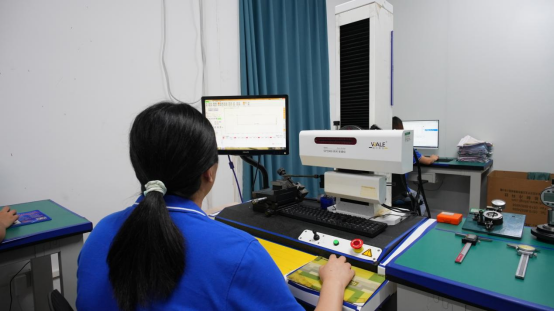
FUYIDE has invested in professional R&D personnel, production equipment, testing equipment and automated production lines. Our quality management systems include ISO 9001 and IATF 16949.
For automotive parts importers, distributors, wholesalers and aftermarket brands, FUYIDE focuses on:
Extensive OAP and automotive pulley product coverage
Applications across a wide range of vehicle brands
Stable product quality and competitive cost-performance
OE number and cross-reference matching support
OEM and ODM services
Drawing-based and customized product development
Manufacturing and quality control capabilities
Efficient production and delivery
Product portfolio support for local automotive markets
In addition to supplying individual OAP references, FUYIDE can work with professional customers using available OE numbers, vehicle applications and target-market information to identify suitable product ranges for their markets.
Frequently Asked Questions About OAP Pulley Failure
What are the most common symptoms of a bad alternator pulley?
Potential bad alternator pulley symptoms include unusual noise, accessory belt vibration, excessive tensioner movement, abnormal one-way pulley operation and premature wear of related belt drive components.
These signs should be investigated as part of the complete FEAD system rather than treated as proof of OAP failure.
Can a bad OAP pulley cause belt vibration?
A malfunctioning OAP can potentially contribute to abnormal belt vibration because it may no longer manage alternator inertia as intended.
However, belt vibration can also result from tensioner problems, misalignment, worn belts, other pulleys or related FEAD components.
What does a bad alternator pulley sound like?
Possible alternator pulley noise can include rattling, chirping, squeaking or rough rotational sounds.
Noise alone cannot identify the faulty component, so the alternator pulley and related accessory drive parts should be inspected.
Can a bad alternator pulley affect charging?
Certain mechanical failures may interfere with the pulley transmitting drive to the alternator. However, charging problems have many possible electrical and mechanical causes.
The battery, alternator, wiring, control system and mechanical drive should therefore be properly diagnosed.
Can I replace an OAP with a solid alternator pulley?
An OAP should not automatically be replaced with a solid pulley, even when the external dimensions appear similar.
The correct pulley type should be selected using OE specifications and verified vehicle application data.
Read more: Overrunning Alternator Pulley vs. Solid Pulley: What Is the Difference?
Looking for a Reliable Overrunning Alternator Pulley Manufacturer?
For automotive aftermarket professionals, preventing OAP pulley failure starts with the right product, accurate vehicle fitment and consistent manufacturing quality.
FUYIDE manufactures overrunning alternator pulleys for a wide range of automotive applications and supports automotive parts importers, distributors, wholesalers and aftermarket brands worldwide.
If you need help identifying an OAP, send us your OE number, vehicle application, alternator reference or current cross-reference number. The FUYIDE team can help match suitable products based on available application data.