


Quick answer
When sourcing alternator pulleys for the automotive aftermarket, distributors and importers should evaluate more than unit price. Key factors include SKU coverage, vehicle application coverage, OE cross-reference capability, OAP/OAD availability, MOQ, replenishment flexibility, quality systems, and mixed product sourcing. A supplier with broader and well-structured product coverage can help reduce sourcing complexity and support aftermarket catalog expansion.
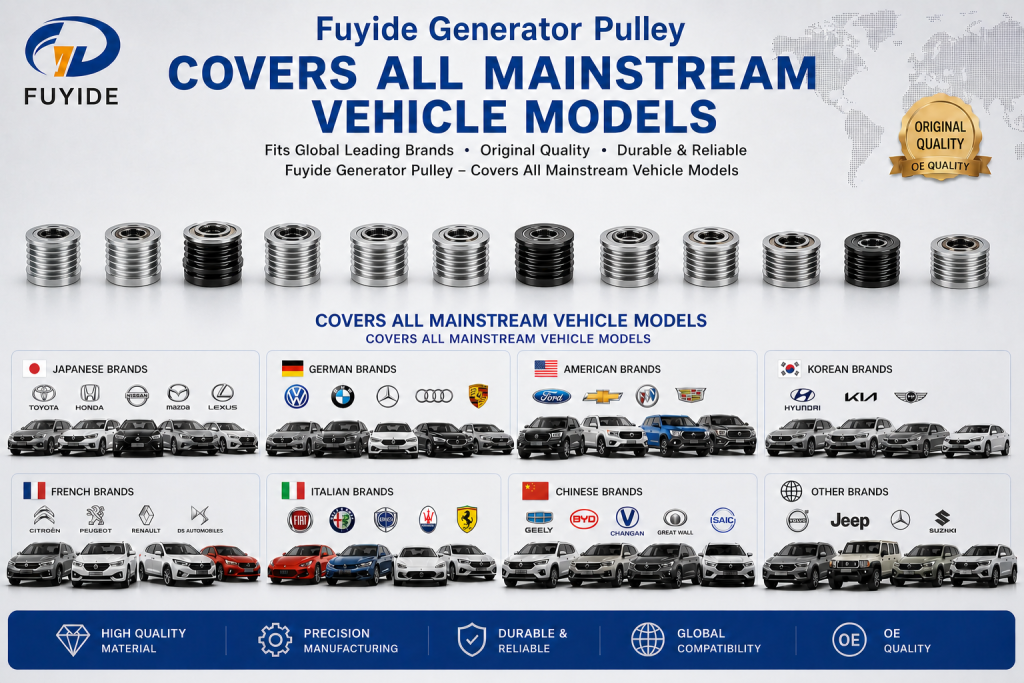
For distributors, importers, and automotive parts wholesalers, sourcing an alternator pulley is rarely about finding just one part number. The bigger challenge is building a product range that covers different vehicle and alternator applications without creating excessive purchasing and inventory complexity.
This is why product coverage should be a key consideration when choosing an alternator pulley supplier. Depending on the vehicle and alternator design, the aftermarket may require different pulley types, including conventional pulleys, overrunning alternator pulleys (OAP), and overrunning alternator decouplers (OAD).For buyers building an aftermarket alternator pulley range, price is only one part of the sourcing decision. SKU coverage, vehicle coverage, OE cross-reference capability, inventory complexity, and mixed product sourcing can have a much greater impact on long-term aftermarket operations.
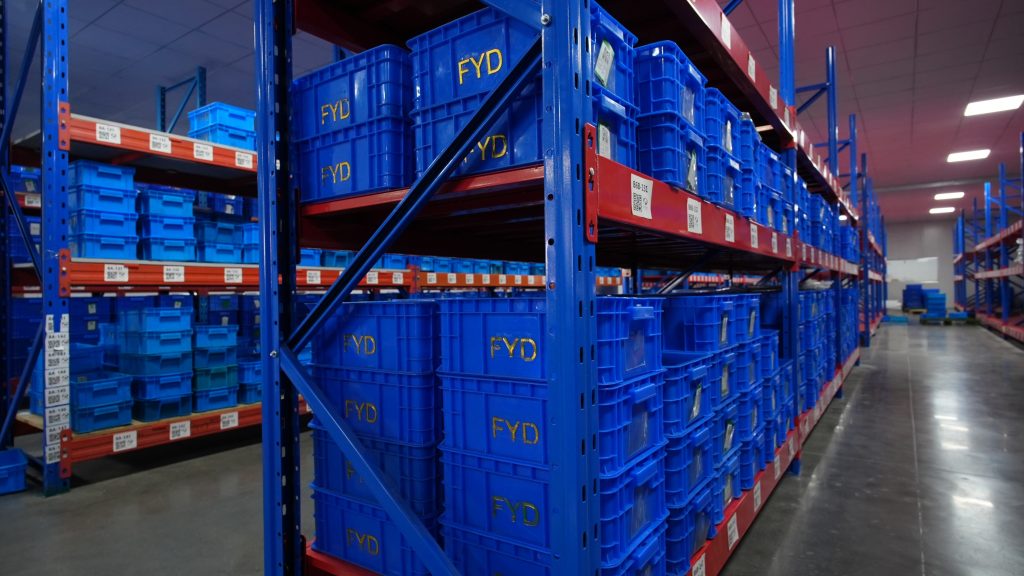
SKU Coverage: More Than the Number of Part Numbers
A large catalog can look attractive, but SKU count alone does not tell a distributor whether an alternator pulley supplier offers useful market coverage.
The more important question is how those SKUs are distributed across real vehicle and alternator applications.
A practical aftermarket range may need to cover different vehicle brands, models, model years, engine configurations, alternator manufacturers, pulley dimensions, groove profiles, OAP/OAD applications, and OE reference numbers.
Two suppliers may both offer hundreds of pulley SKUs while delivering very different market coverage. One range may be concentrated on a relatively narrow group of applications, while another may provide broader coverage across common vehicle platforms.
For distributors, better-structured SKU coverage makes it easier to develop a commercially useful aftermarket alternator pulley portfolio without filling catalog gaps through multiple suppliers.
Vehicle Coverage Directly Affects Aftermarket Potential
Vehicle coverage is particularly important when evaluating an OAP pulley supplier.Even within the same vehicle brand and model family, alternator pulley requirements may change according to engine type, production year, alternator configuration, and regionalspecification.

For a distributor, the practical question is:
“How many vehicle models in my target market can this supplier cover?”
Limited coverage can create hidden sourcing costs. Buyers may need to work with additional suppliers simply to complete their product range. That means more supplier qualification, quotations, purchase orders, shipments, documentation, and quality-management work.
An alternator pulley supplier with broader vehicle coverage can help importers and wholesalers consolidate purchasing while maintaining a competitive aftermarket catalog.
OE Cross-Reference Is Critical to Correct Part Identification
Product identification is another important part of alternator pulley sourcing.
One customer may provide an OE number. Another may provide the alternator reference. A workshop may identify only the vehicle, engine, and production year. Distributors may also operate their own internal numbering systems.
A reliable OE cross-reference structure helps connect:
OE number → alternator application → pulley specification → aftermarket SKU
This becomes especially important when sourcing OAP and OAD products.
Two pulleys may appear similar but should not automatically be considered interchangeable. Thread dimensions, number of grooves, outer diameter, width, internal mechanism, and rotational characteristics may all affect compatibility.
Therefore, when evaluating an OAP pulley supplier, buyers should consider not only product availability but also how effectively the supplier can support OE cross-reference and application matching.
Broad Coverage Must Be Balanced With Inventory Complexity
More product coverage does not automatically mean better inventory performance.
Every additional aftermarket alternator pulley SKU requires demand forecasting, purchasing, warehouse space, and replenishment management. High-volume references need sufficient stock, while long-tail applications can tie up working capital if inventory is not planned carefully.
For distributors, the objective is therefore not simply to carry more SKUs. It is to achieve useful market coverage with manageable inventory complexity.
Factors such as fast-moving versus slow-moving applications, minimum order quantities, lead times, safety stock, regional vehicle populations, and cross-reference relationships should all be considered.
This is also why product serialization matters. A structured product family allows buyers to select core references first and gradually expand into additional applications based on market demand.
Mixed Product Sourcing Can Simplify Procurement
Aftermarket buyers rarely operate with only one product category.
A distributor searching for an OAP pulley supplier today may eventually require conventional alternator pulleys, other pulley types, bearings, precision automotive parts, or related components.
If every category requires a different manufacturer, procurement can become increasingly fragmented.
More suppliers mean more qualification processes, negotiations, MOQs, purchase orders, shipments, documentation, and quality follow-up.
Working with an automotive aftermarket supplier capable of supporting mixed product sourcing can help reduce this complexity. Where technical requirements, product quality, pricing, and delivery conditions are suitable, sourcing multiple product categories from one manufacturing partner can simplify purchasing and logistics.
This can be particularly valuable for importers and wholesalers developing a broader aftermarket portfolio.
What Should Distributors Look for in an Alternator Pulley Supplier?
Unit price is important, but it should not be the only criterion when selecting an automotive aftermarket supplier.
Distributors should also evaluate:
SKU and vehicle application coverage
OE and aftermarket cross-reference data
OAP/OAD and other pulley type availability
Manufacturing and testing capabilities
MOQ and replenishment flexibility
Support for mixed product sourcing
New application development capability
Quality management systems
Export and B2B supply experience
The goal is not simply to purchase an individual part at a competitive price. It is to build a sourcing structure that can support the distributor’s catalog as the business grows.
FUYIDE: Supporting Broader Alternator Pulley Coverage
For buyers looking to consolidate alternator pulley sourcing, FUYIDE focuses on developing products as structured series rather than isolated part numbers.
Changzhou Fuyide Precision Machinery Co., Ltd. is located in Changzhou in China’s Yangtze River Delta. The company is engaged in the manufacturing, processing, and sales of automotive parts, bearings, precision mechanical parts, molds, and related precision mechanical products.
Over the years, FUYIDE has continued to introduce professional technical personnel and upgrade its production and testing equipment. The company now operates with professional R&D personnel and automated production lines while continuing to develop standardized management, standardized production processes, and serialized product ranges.
This full-range approach allows FUYIDE to support distributors, importers, and wholesalers that require multiple aftermarket alternator pulley references rather than a single SKU. For customers searching for an OAP pulley supplier, FUYIDE can also support sourcing based on target applications, OE references, and product specifications.
FUYIDE has held ISO 9001 and IATF 16949 quality management system certifications since 2019, supporting its quality management framework for automotive component manufacturing.
Product Coverage Is Ultimately a Supply-Chain Advantage
For an aftermarket distributor, selecting the right alternator pulley supplier is not simply about comparing the price of one pulley.
The real sourcing question is whether a supplier can support the required SKU coverage, vehicle coverage, OE cross-reference, inventory strategy, and mixed product sourcing as the customer’s aftermarket business develops.
A capable automotive aftermarket supplier with a structured product range can help reduce sourcing fragmentation and make catalog expansion more efficient.
If you are developing or expanding an aftermarket alternator pulley range, FUYIDE can provide product information and cross-reference support based on your target vehicle applications and OE numbers.
Contact FUYIDE to discuss your alternator pulley, OAP pulley, and mixed automotive parts sourcing requirements.
Related Products
Frequently Asked Questions
What should distributors look for when sourcing alternator pulleys?
Distributors should evaluate SKU coverage, vehicle application coverage, OE cross-reference capability, OAP and OAD availability, MOQ, lead time, quality management, replenishment flexibility, and mixed product sourcing capability rather than comparing unit price alone.
Why is SKU and vehicle coverage important for alternator pulley suppliers?
Broader SKU and vehicle coverage can help aftermarket distributors reduce catalog gaps and avoid sourcing different applications from multiple suppliers. Coverage should be evaluated by vehicle models, engine applications, alternator configurations, pulley specifications, and OE references rather than SKU count alone.
How can buyers identify the correct alternator pulley?
Buyers can provide the OE number, alternator reference, vehicle model, engine, production year, or existing pulley specifications. Important specifications may include pulley type, groove profile, outer diameter, width, thread dimensions, and rotational characteristics. The supplier can then support OE cross-reference and application matching.
Can one supplier provide different types of alternator pulleys?
Depending on the supplier's product range, buyers may source conventional alternator pulleys, overrunning alternator pulleys (OAP), overrunning alternator decouplers (OAD), and related automotive precision components from one manufacturing partner. Mixed product sourcing can help distributors simplify purchasing and logistics.